

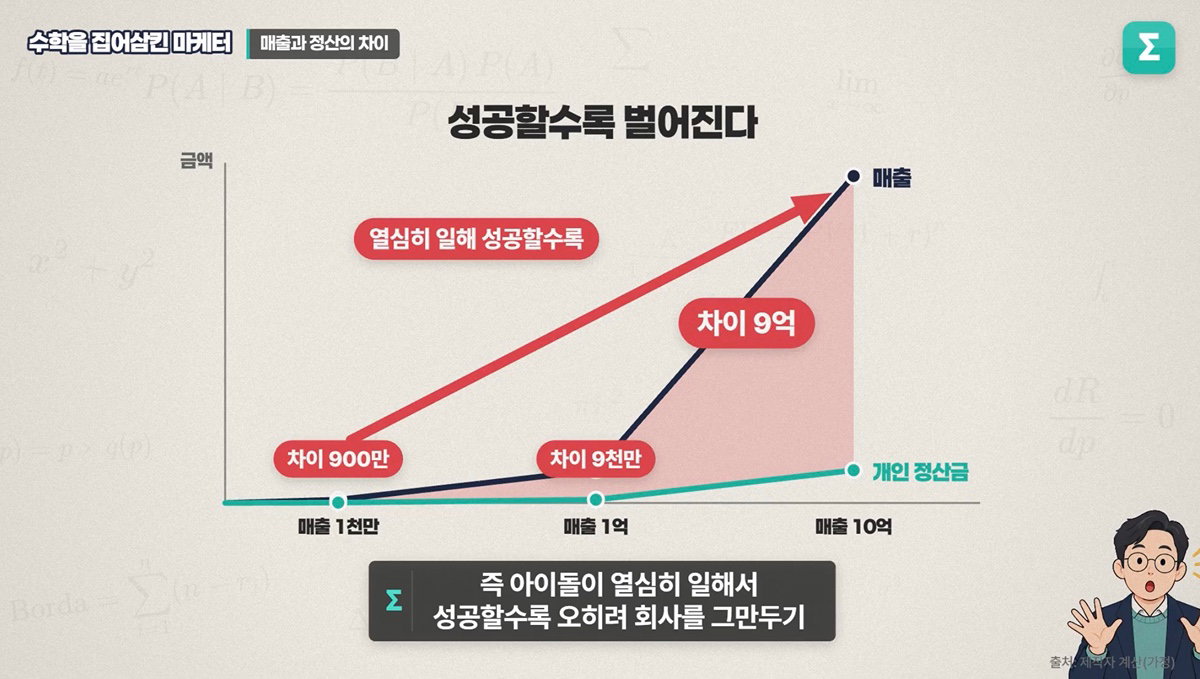
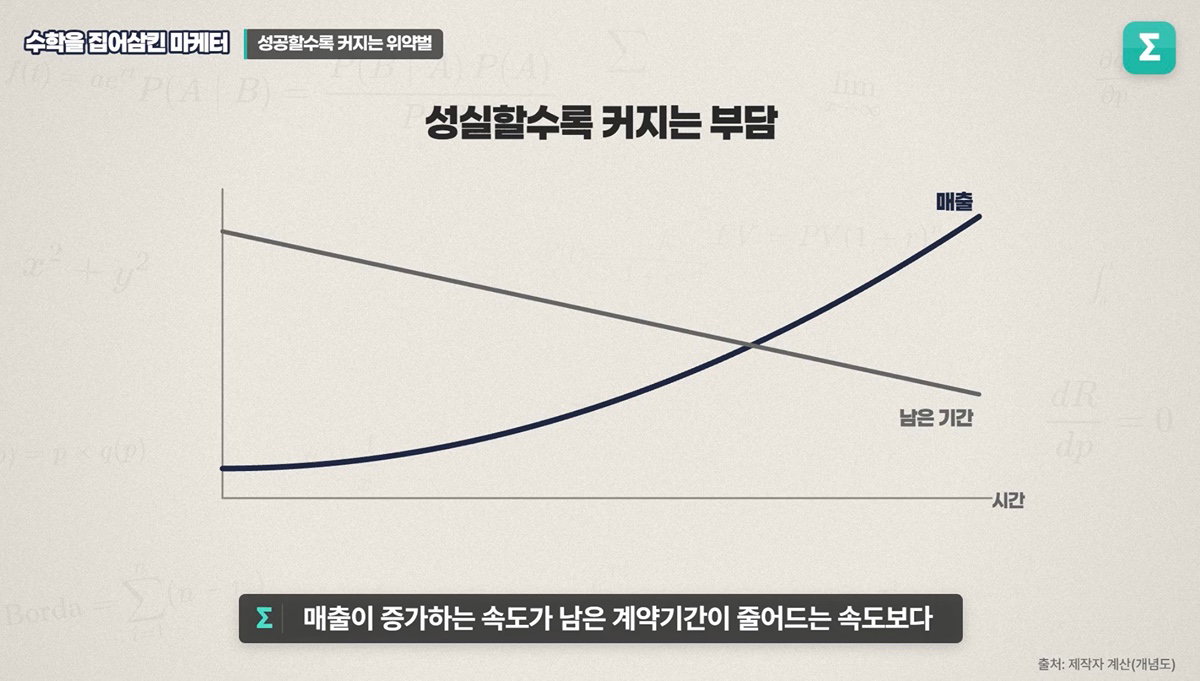
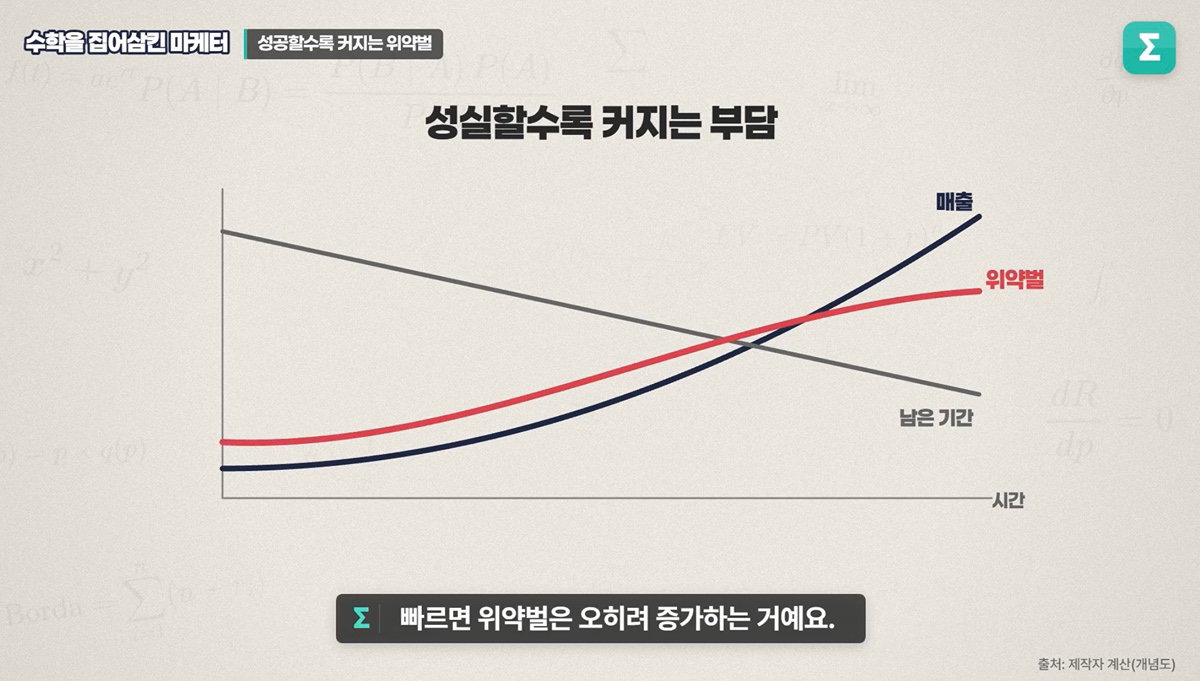




Under the current standard contract, a contractual penalty can be calculated by multiplying the artist’s average monthly revenue over the previous two years by the number of months remaining on the contract.
However, the provision does not automatically apply whenever an artist leaves an agency. Under the standard contract, the penalty applies when the agency has fulfilled its contractual obligations but the artist violates the agreement during the contract period for the purpose of unilaterally terminating it.
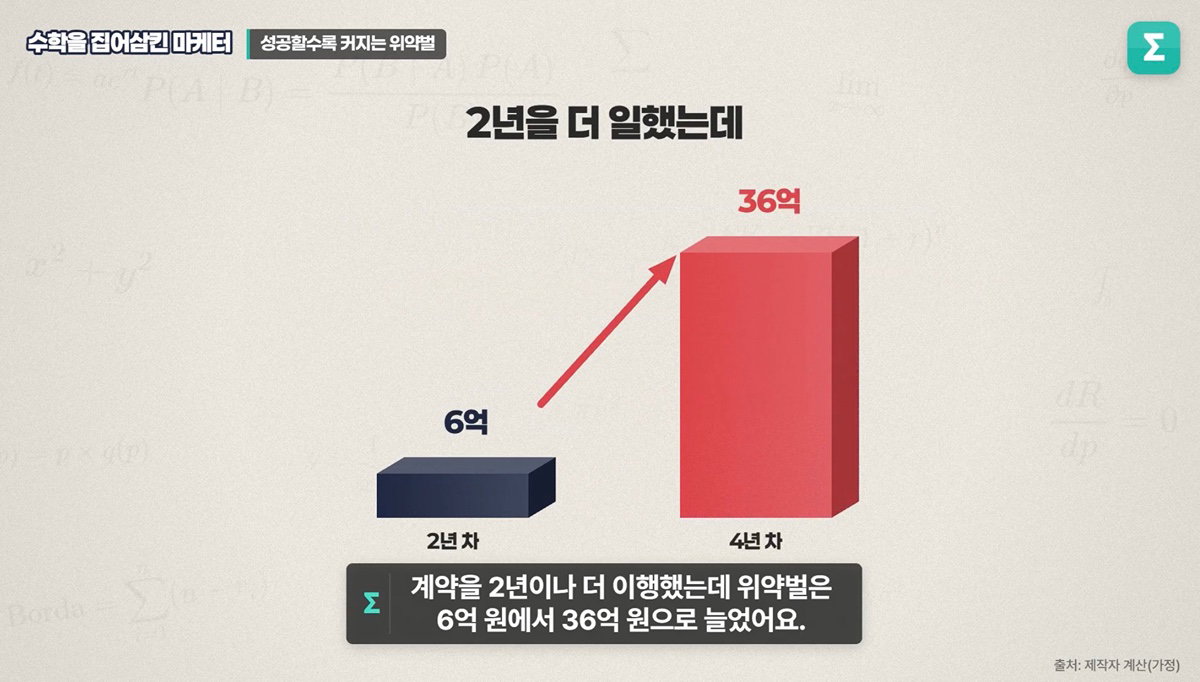
The post questioned the structure of the formula itself, arguing that because it is based on revenue rather than the artist’s individual settlement payments, an artist who becomes significantly more successful could potentially face a larger penalty even after completing more of the contract.
Several accompanying graphics illustrated hypothetical scenarios in which rising revenue outweighs the reduction in the remaining contract period, causing the calculated penalty to increase over time.
The post also cited the 2009 TVXQ contract dispute. In that case, the Seoul Central District Court partially granted an injunction after raising concerns about the combination of a lengthy contract period and excessive predetermined damages, finding there were grounds to question whether the agreement imposed unfair burdens on the artists.
However, the TVXQ case involved a different contract and does not by itself determine whether the current standard-contract penalty provision is invalid or how it would apply to NewJeans.
The discussion on TheQoo was largely skeptical of the original post’s criticism. Many commenters argued that substantial penalties are necessary to protect agencies that invest in artists and to discourage unilateral contract termination after an artist becomes successful.
Netizen Reactions
The sampled comments were largely unsympathetic to the argument that the penalty formula is inherently unfair. Many commenters argued that penalties are meant to protect an agency’s investment and discourage artists from leaving immediately after becoming successful, while a smaller number distinguished the current standard contract from older cases such as TVXQ’s.
1. How is this the same as a telecom cancellation fee? ㅋㅋㅋㅋ That’s a relationship between a telecom company and a customer. If anything, the company is the one investing the initial costs into the artist. It’s not like the artist paid the company money as a customer in order to debut...
2. I kept scrolling thinking, “Isn’t this just unavoidable?” and it looks like most people think the same way. Investors don’t dig into the ground and magically find money. If people could just leave whenever they were unhappy without paying much of a penalty, everyone would try to leave. Then how is the company supposed to recover its investment?
3. If you signed a contract, you should honor it. Otherwise, how is that any different from having a thief’s mentality?
4. None of this would be an issue if they had just honored the contract in the first place.
5. I was thinking, “Isn’t this obvious? What are they even talking about?” and it looks like everyone else thinks the same thing ㅋㅋㅋㅋ Why do you think it’s called a contractual penalty? Follow the terms of the agreement and don’t breach it. Penalty clauses are included in brand advertising contracts too, so people don’t damage the brand’s image... They’re a mechanism for making sure the terms of a contract are followed. Without them, people could just do whatever they wanted, right?
6. Back in TVXQ’s case, it was a 13-year slave contract and the penalties were genuinely insane ㅋㅋ Nowadays, with the standard contract, the maximum contract period is seven years, and the penalty is calculated using the previous two years’ average monthly revenue multiplied by the remaining months. Isn’t it basically just that the more you earned, the more you pay?
7.Instead of thinking about how much the penalty will be, just honor the contract.
8. Isn’t this obvious? ㅋㅋ Especially these days, major-agency idols don’t even have trainee expenses charged back to them... If the company invests all that money and then an artist terminates the contract after getting popular in one or two years, wouldn’t the company be the one getting screwed? ㅋㅋㅋㅋㅋ
9. If you didn’t like that contract, shouldn’t you have just not signed it in the first place?
10. Seems obvious to me... Otherwise, people would probably just run off as soon as they became a little successful.


0 Comments